Sunday, March 24, 2019

Project Blog (3/24/19)

Summary:
We created a musical instrument for this project. The instrument is very similar to a ukulele in looks but there are many differences. The first, minor, difference is that ours has 3 strings in order of lowest- highest and ukuleles have 4 strings in a different order. But that is just a minor difference; ours also produces sound in a different way. The strings are not necessarily to pieces of the instrument that directly vibrates the air and creates sound. Instead, when you pluck the string, it vibrates against the small cardboard piece on the base kind of like a snare drum. This grossly amplifies the sound since it shakes the whole instrument made of cardboard which is hollow so that helps too. It also makes the instrument have a whole new sound that I have not heard in anything else.

Backward-Looking:
I do a lot of music related activities so I already knew a lot about this subject. I do mostly percussion instruments so I have spent time observing how it worked and how it vibrated. When percussion instrument you can see it vibrating and sometimes feel the vibrations when you put your have near a cymbal soon after you hit it.

Inward-Looking:
I do like this piece of work in general. I really like how I used the idea of how a snare drum works to produce lots of sound, which is not used ever in string instruments. But I don't particularly like how it looks. It looks far too much like a ukulele which would make it un-original. Even if I had no say how it looked because of my partners. But another thing I don't like is the surface of the top cardboard and how ripped up it is.

Outward-Looking:
We simultaneously did our work similar and different than others. Multiple other groups had a similar idea with the shape of a guitar/ukulele just with different takes on it. But what was unique is our take on it as I mentioned earlier with the rubberband buzzing on the cardboard.

Forward-Looking:
I would like to improve upon making it look nicer since it looks kind of scrappy due to the fact that we had many iterations. I would also like to have teammates that knew kind of what music was and how it worked or at least admitted that they didn't really know and didn't take over everything until the very end when I had figure out how to make it actually work.

Sunday, March 3, 2019

Vibrations of the inner ear (3/3/19)

Very loud music or any loud noise is very harmful to your hearing. When your ear is exposed to sound, your eardrum vibrates and after a few steps with the hammer and the anvil. There are nerve endings in your middle ear the send signals to your brain to process it as sound. But when I sound is too loud, those sensitive nerve endings start to die and cause problems such as hearing loss and tinnitus. If it is really loud, then your ear drum has a chance of rupturing.

Sunday, February 3, 2019

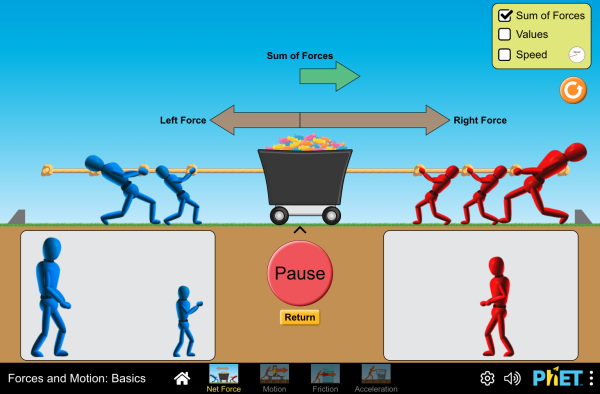
Weekly Blog (2/3/19) Forces

Image result for forces
https://phet.colorado.edu/en/simulation/forces-and-motion-basics
Summary:
Force is any interaction with any object that will, in some way change the motion of an object. That means that if an object is in place and not moving it will stay that way until it is acted upon by an external force, causing it to move. Same goes for if an object is already in motion. It will stay that way until acted upon causing it to change course or slow down, speed up, or change it's motion in any way. If multiple, opposing forces, are present then you subtract the lesser force from the greater to get the net force.


S&EP:
To demonstrate this concept as a model, we used a few of the simulations from the link under the image above, including the one portrayed in the image.

XCC:
If everything is stable, there is 0 net force nothing will ever change until one force becomes greater than the rest or another force is applied (stability and change).

Sunday, January 20, 2019

Weekly Blog(1/20/19) Acceleration Graphs

Image result for acceleration graph
Summary:
Acceleration graphs are very use full for documenting how fast something is accelerating. The x axis is acceleration and the y axis is time. That can be useful if you are doing something like buying a race car and you don't want it to take forever to get up to speed. It is also useful for measuring how much force is needed to bring something up to speed.

S&EP:
We used models

Monday, December 24, 2018

Project Blog (12/20/18) Charity Fair

Summary
  Charity fair is an event where we research a charity and what it does. Then we make a product and a ignite presentation to try to advertise our charity. Then the top few groups get a share of the money earned on charity fair donated to the charity that they campaigned for. We always raise a lot of money on the night of charity fair selling the products with the board that we worked on for the past few days.

Backward-Looking
Before this started I knew that shootings were a big problem in the US but I didn't know how much we could do about it. I thought that the only way to prevent these shootings was to make guns or at least semi-automatic weapons. But there are so many other things you can do, since we aren't really getting anywhere with law against guns. There a ways to be alarmed if someone has the symptoms that they might do a shooting and give them mental help and support that they need.

Inward-Looking
I feel like the whole project, in the end, turned out pretty good. Our final presentation of the ignite presentation on charity fair night actually turned out good. Our board looked good too. But I felt like we could have had another product that people would have been more happy to buy.

Outward-Looking

Sunday, December 16, 2018

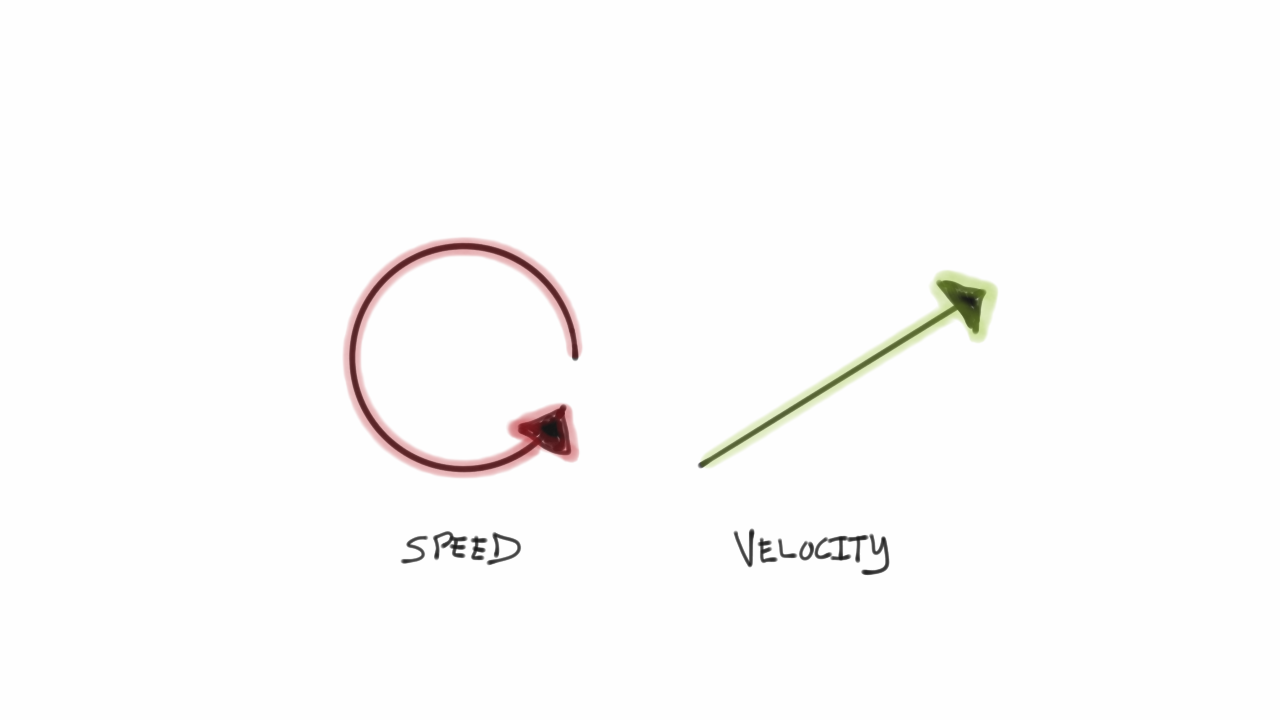
Weekly Blog (12/16/18) Speed vs Velocity

Image result for velocity
https://www.fs.blog/wp-content/uploads/2018/03/Speed-and-Velocity.png
Summary
          Speed is how fast something is moving. Nothing to do with direction or how it is moving just the pure, well, speed. Velocity is speed and direction with mass.

S&EP
          We put cars down a track and measured the time it took different cars to get to the end. We also watched a lot of videos explaining these different functions and what is the difference. This helped me toward mastery because it helped me understand how speed is a lot more general and velocity is speed and direction.

Saturday, December 8, 2018

Weekly blog (12/8/18) Motion

Image result for motion
https://cdn-images-1.medium.com/max/1600/1*sOGYN3djYzO3Kcu-wMGtCg.jpeg
Summary
          Motion is the process of moving something from one place to another. There are different types of motion. One of these is relative motion which is motion in relativity to something else. If you are walking, you are moving in relativity to the sidewalk. If you are lying down you are staying still in relativity to the bed and earth. But you ARE moving in relativity to the sun the the rest of the cosmos. Moving is all about relativity. Everything is moving from galaxies flying through space and unbelievable speeds to the atoms vibrating inside of us. But a lot of things just appear to be stationary around us because we are moving with them.
S&EP
          I constructed physical, mental or conceptual models to represent and understand phenomena when I graphed people's motions to figure out their displacement vs distance they traveled. This helped me understand the difference between displacement and distance traveled.

XCC
          Everything that has matter has some sort of energy. It is nearly impossible to have matter with no energy in it. This is why everything is moving. If something has energy, it's molecules and atoms will be vibrating. Everything is always moving.