Sunday, November 4, 2018

Weekly Blog(11/4/18) Biodiversity

Image result for biodiversity
https://www.youtube.com/watch?v=ErATB1aMiSU
Summary
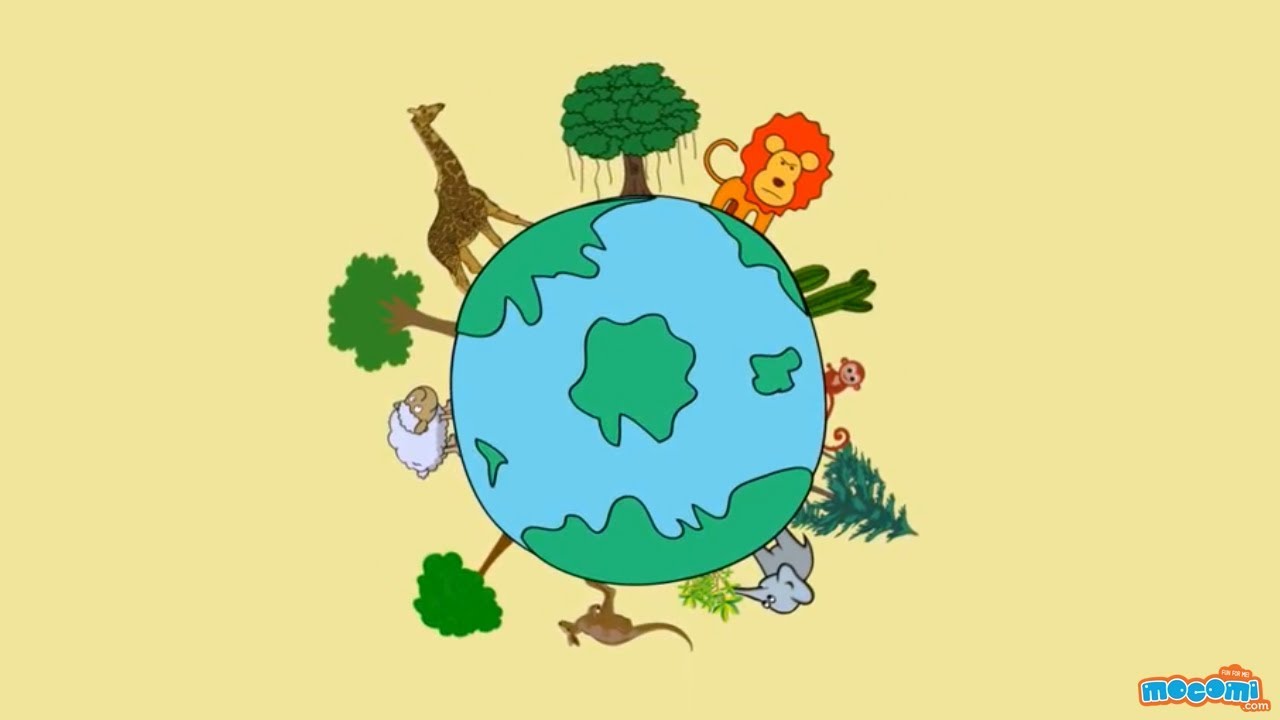
          Everything on earth is at least slightly different in their genetic makeup. Evolution happens when that genetic makeup in species changes over time. An increase in biodiversity in the world happens when a species drifts apart and branches off into two separate species. But there will never be two species on earth with the exact same genes besides twins and clones. Even then we are all different in little ways. Some people read a little too much into this though.
S&EP
         I used tables, graphs, spreadsheets, etc. to display and analyze data in worksheets. We looked at charts to see what species are closer to each other and may have come from a common ancestor. This helps us see how everything came from a few of a certain animal or plant and branched off and evolved.
XCC
          Everything changes over time whether it's mutation or anything else. When things get separated they change over time in different ways because of their surroundings. It is and almost infinitely small chance that two things will be genetically the same unless they are twins. It is impossible in quantum physics to have two of the same thing in our universe. Everything in the universe just like life on earth came from one thing. The universe and everything came from a big mass that exploded as the big bang and turned into what we know now. All life on earth came from one or two bacteria that over time changed, spread and evolved into everything we know today.

Sunday, October 28, 2018

Weekly Blog(10/28/18) Proving evolution

Image result for evolutionSummary
There are many ways to prove evolution. When you look back enough sometimes you see a species that looks very similar to two different today. This is comparative anatomy. You can also took for useless organs and body parts that may have once been used. As an example, whales have a bone that serves no use near where legs would be. And sure enough if you go back, there is a fossil that is pretty much a whale with legs.
S&EP
I constructed physical, mental or conceptual models to represent and understand phenomena when I learned about the whale bones. Another example would be the appendix. We don't use it now and the most it might do is get infected.
XCC
All things change over time. Patterns occur and there is nothing we can do. Everything will always and has kept evolving and changing. 

Sunday, October 21, 2018

Weekly blog(10/21/18) Genetic drift

Image result for genetic drift
https://evolution.berkeley.edu/evolibrary/article/evo_24
Summary
Genetic Drift is the process of how when a population gets split, they slowly differ more and more. They start the same and slowly they adapt to there different surroundings and events. In this picture, group 1 will most likely be more green than the other two.

Sunday, October 14, 2018

Weekly Blog (10/14/18) Evolution

Image result for evolution
Summary
          Evolution is how species change over time through extinction of undesired traits and random mutations. One way that undesired trait disappear is survival of the fittest. That is the process on how the best traits continue and the worst traits die out.This process makes sure that the species as a whole gradually advances. The random mutations are the reason there are so many animals.

S&EP

Sunday, September 30, 2018

Weekly Blog(9/30/18) Earth through the years.

Image result for eras of the earth
Summary
The earth has been around a long time. This times has been divided up into the different types of life. First there was the Hadean Eon. This eon is not on the chart on the left because the Hadean eon supported no life and has no rock left on earth to observe. Next was the Archean Eon. In this time, the earth had cooled, and the first bacteria/algae had formed and started to produce oxygen. Next was the Proterozoic Eon. Multi-celled organisms started to form and there where more of them. Next was the Cambrian Period/Explosion. Life was rapidly evolving. There where many trilobites. For the rest of the Paleozoic era things slowed down but there was a mass extinction at the end of the ordovician period and the first brains popped up during the Mississippian Period. Next was the Mesozoic Era. At this time things started to get big. This is when most of the dinosaurs we know romed pangea. Next is the Cenozoic Era in this era a lot of the animals we know. Humans only started to appear at the end of this era and mammoths went extinct. 

S&EP
I constructed physical, mental or conceptual models to represent and understand phenomena when I got with a group and made a poster where we each had to write about a different era. Mine was the Archean Eon. There was not much to write about the archean eon because there was near no atmosphere and there where only single celled organisms. But I think it
Image result for archean eonmust have been very beautiful (besides the fact that sunsets/rises were boring and you would die instantly on the surface). This is because there would be crystals covering earth like in the picture. It would be like a cave without being underground.

XCC
I guess this would all be stability and change. This is because things are always changing and there is nothing we can do about it. Things will always keep on moving. Nothing will ever be the same forever.

Sunday, September 23, 2018

Weekly Blog (9/23/18) Rock Cycle and Rock music

Image result for rock cycle
http://www.mineralogy4kids.org/?q=rock-cycle
Summary 
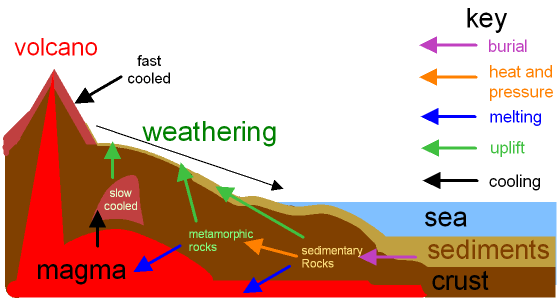
The rock cycle is the cycle that rocks go through to become Sedimentary rocks, Metamorphic rocks, Igneous rocks, and everything in between. We didn't really learn anything different this week so I'm to talk about a new angle on what we learned last week. I'm going to talk about how the rock cycle (starting with magma) lines up with the evolution of rock music. First off, in the 60s the Beatles invented this new form of music that people were curious about and kickstarter this new genre of music and culture. This is when the magma hardens and first becomes a new, solid rock.  Next in the late 60s early 70s new bands started noticing what was happening and popping up everywhere. In 1970 the Beatles broke up and some of them made their own music. This is weathering and erosion because the rocks break apart and mix with other rocks, and coming from other places other than that one mountain/volcano. In the mid 70s everything changed. The music started evolving into more disco-ish music. This is like when it turns into sedimentary rock and becomes solid again but is very different than how it was before. In the 80s people started to make the rock music... well... a little harder and louder. The same thing happens with rocks when they go under heat and pressure and become a harder, different rock. The same thing happened even more so in the 90s. In the 2000s things started changing again and getting sad and just overall different. This is when the genre "modern rock" started to emerge in bands like Fall Out Boy. 
This when it changed into magma and the term rock became for liquid and not exact. Finally, some modern music exploded out of a volcano and uses samples of old music and a lot of songs from the 60s 70s and 80s are popular again. Other rock crystallized underground and continues to evolve like the Imagine Dragons album "evolve".

Image result for the beatles
https://www.youtube.com/watch?v=WrAV5EVI4tU
S&EP
 I constructed physical, mental or conceptual models to represent and understand phenomena when I made a small comic of a rock going through the rock cycle. To think of the cycle our rock goes through, we had an activity where we went to different tables that were labeled different places like "earth's interior" or "ocean" and we would roll a die to figure out where we were going next. This really helped us understand that not all rocks follow this same, structured cycle that most diagrams use. Sometimes rocks can become little dust particles in streams, the ocean, or even the air. I did not think about the fact that air is part of the rock cycle until I did this activity. It was also pretty fun.

XCC
          I think that this is patterns because everything follows a certain cycle or pattern. From rocks to rock music. I really have no idea if this is coincidence or not. Some things have much larger scale cycles, like the universe expanding and contracting. And other things are much small like an atom turning. All I know is that there are cycles everywhere whether we notice or not. 

Friday, September 14, 2018

Weekly blog (9/13/18) Rock cycle

Image result for rock cycle
http://www.cotf.edu/ete/modules/msese/earthsysflr/rock.html
Summary
The cycle is the slow, infinite cycle that all rocks go through. There are three main forms of rocks in this cycle.First, Sedimentary rock; this rock is formed by the pressing and cementing together of sediments. This rock might have fossils in it and you can easily see the grains of sand or pieces in it like limestone and sandstone. It is sometimes brittle depending on its age. You can see the layers in this rock as seen on the grand canyon and similar formations. The second form of rock is Metamorphic rock; this rock is formed by a lot more heat and pressure being put on any of the other forms of rock. This forms a smooth rock like granite or marble that might have ribbon like layers in it if it is made from some types of sedimentary rock. The last main class of rocks is Igneous rock; this rock is formed when metamorphic rock is put under a lot of heat and melted into magma. Then the magma could crystallize into intrusive igneous rock under the ground, or extrusive igneous rock. More commonly known as (lava rock) Igneous rock is usualy glasslike and might have bubbles like pumice.
Image result for rock cycle
http://www.gcsescience.com/rk1.htm
S&EP
 I used models to explain and predict behaviors of systems, or test a design as I used starburst to represent the rock cycle. First we represented weathering by cutting up different colored starburst into small pieces. Then we mixed them up and and lightly mashed them together to represent sedimentary rock. You could still see the original forms, but it is stuck together. The we put the sedimentary rock into a ziplock bag and applied heat and pressure from our hands until it was flat. Then we folded it and attached more heat and pressure. This created "metamorphic rock". At this point it looked ty-dye like marble and you could not see the original pieces. To make igneous rock we put the "rock" into the microwave to melt it into magma. Once it hardened it became the same color and was all crystallized (the sugar). 

XCC
There is a cycle for almost everything. This is a pattern because there are a lot of things that if they are used they will end up back where they started. There are cycles for water, carbon, rocks, phosphorus, sulfur, and plenty of other minerals. There are so many things that just go in endless cycles.